Tuesday, July 20, 2021

Plausible denial


What follows is an all-to-sad commentary on government. 
But what if "government" was "PMO" in this quotation? That would be really sad. 

Perhaps "lie" is too strong; perhaps 'self-delusional' or some other less in-your-face spin is more the case. But you get the point: the unvarnished truth is sometimes just too much for the moment. Time is necessary to find your way back on the center stripe. And to make time, some spin of the truth is required.

Perhaps; but plausible denial: that's running from responsibility. That can not be condoned.

“It is a truism that all governments lie: they lie to each other, they lie to their own people, they frequently lie to themselves. 

But a fundamental premise of functional government is that such deception .... must be an exception rather than a norm: to rule effectively, a government must be able to maintain at least a minimum level of credibility; by the same token, it must inevitably fail when it chooses to function on plausible deniability alone"

Daniel Allen Butler


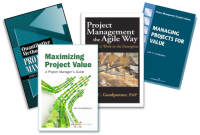
Buy them at any online book retailer!

Saturday, July 17, 2021

Two choices


To a senior manager:
"What is the best way to manage a project?”
In response:
“You’ll find that there are always two possible decisions open to you,” the senior manager replied crisply. “Take the bolder one—it’s always best"

Daniel Allen Butler (paraphrased a bit)


Buy them at any online book retailer!

Wednesday, July 14, 2021

Perfect proposals (by Clayton)


Do you read Mike Clayton? You probably should.

Here is his idea of the 12 points of a perfect proposal:

What are the elements of a perfect proposal? Here are 12.
 
You
No one wants to hear all about you. See the next subtitle. That's who your audience wants to hear about... themselves. But (and it's a big 'but') they do need to know enough about you to know you are worth paying attention to. So, for a cold proposal, this means using the introduction or cover letter or some other means to establish your credibility - what my dad used to call your bona fides.

Them
This is what they want to know... What's in it for them? Show how you have their best interests in mind with this proposal. You understand their needs and desires and know how to satisfy them better than any alternative solution can.

Focus
Keep your focus on the specific situation. Any sign of standard 'boilerplate' descriptions, arguments, or evidence will make it look less about 'Them' and more about 'anyone'. 

Value
How will your proposal deliver and maximise value to them? The vast majority of business decisions revolve around the capacity to either make money or save money.

Benefits
But there can be other benefits too. Describe the non-financial value your proposal offers - and what this means to them. This, of course, means you need to take time to understand them and their requirements and priorities. 

Emotions
All that hard evidence gives them a reason to make the decision to accept your proposal. But it won't motivate them to do so. For that, you need to tap into their emotions. Find emotional hooks into pride, fear, duty, desire, ambition, loyalty, passion... Emotions drive decisions: reasons justify them.

How
So, you also need to show how your proposal will solve their problem, deliver their joy, or enhance their reputation. Make the link between what they want and what you are proposing as clear, simple, and short as you can. A 15-step sequence from the cause (your proposal) to the effect (their outcome) won't cut it. 

Process
Next they need to know what will happen if (when) they say yes. What will you do, what will they do, and how long would it all take? For confidence that your is the right choice, they need to see a plan that clearly works.

Context
This section lets them understand how your proposal fits into your life and theirs - your business and their own. This shows that you and they are compatible and is the equivalent of the more traditional (cheesy) 'how we are different to the competition'. Of course this differentiates you. It shows how this proposal is right for them and for you.

Business
Don't go all techy on a technical proposal. Remember who you are speaking to. If your audience is a business person or a group of businesspeople, focus on the business. If your audience is software engineers, focus on the business of software engineering: not the hardware. What is their business? That's how to frame your proposal.

Structure
I get it. You have a lot of ideas to get down. But, before you start, develop a structure that makes it compelling for them to follow. If they asked six questions in a sequence, then a great structure is to answer those six questions... in the same sequence. Make it easy for them to say 'yes'.

Quality
Finally remember Mark Anthony's advice: 'The evil that men do lives on. The good is oft' interred with their bones'. People remember your mistakes and easily forget all the good stuff. Make sure you check the quality of your proposal, not once, not twice... Better still, get the pickiest, most pedantic person you know to do it for you. You invested all that time. Now add a little more investment, to avoid throwing it all away!


Buy them at any online book retailer!
Wednesday, July 7, 2021

What is boldness?


"About boldness: Some might say “impulsiveness,” yet what is boldness but impulse leavened by calculation?

Daniel Allen Butler

Calculation? Where does that come from?
Experience is where it comes from. 

And what can we say about experience?

Steve Jobs would say it's one of the two coins that we get paid: One is cash, and the other is experience.
Others say it's the accumulated wisdom of all your encounters, good and bad

So, can you be bold without experience to base the calculation?
Yes, but then you are going by the "book" (others experience), or guessing or hoping or, in the worst case: foolish!


Buy them at any online book retailer!

Monday, July 5, 2021

The first rule of data


You can't have too much data .... correct?
Actually, not correct.

The first rule of data:
  • Don't ask for data if you don't know what you are going to do with it
Or, said another way (same rule)
  • Don't ask for data which you can not use or act upon
And, your reaction might be: Of course! 

The data plan
You may be shocked to learn that often there is no data plan! 
My experience: In the PMO there are often too many incidents of reports, data accumulation, measurements, inquiries, etc. for which there actually is no plan for what to do with it. 
  • Sometimes, it just curiosity; 
  • Sometimes you're out of your lane and it's really none of your business to know
  • Sometimes it's just blind compliance with a data regulation; 
  • Sometimes it's just to have a justification for an analyst job
  • Sometimes it's a misguided idea that "there can't be too much data".

The tests:
  •  If someone says they need data, the first question is: "How does it add value to what you are doing, and do you have a plan to effectuate that value-add?"
  • The second question is: "Do you have a notion of data limits: enough, but not too much to be statistically significant, and control limits for useful -- or not -- metrics."

And information?
Well, the usual definition is that information is data, perhaps multiple data, integrated with context and perhaps interpreted for the current situation.

So, the rule can be extended: if there are not means to process data into information, is the data necessary to be collected?

Bottom line: To state the obvious: always test for value-add before spending resources to collect, process, and disseminate data.


Buy them at any online book retailer!

Monday, June 28, 2021

The funnel and the pyramid!


In every book written about project management, the PMO is at the apex of a pyramid. Sometimes, as in Agile project methodology, the pyramid is flatter than most, but always there is an identifiable top figure.

Fair enough.

But Robert Gates, former Defense Secretary [and holder of many other government titles] writes that he often felt like the pyramid was inverted and thus took the look of a funnel. In the funnel model, the 'decider' is at the bottom of the funnel, with others pouring stuff in. 
 
Funnel v. Pyramid
How can it be that the top person is at the bottom, figuratively?

Gates explains: in the pyramid model, stuff is either pushed up for political cover, or because protocol demands that the decision lies higher, or because the apex person is pulling stuff up that they want control or inspection of

But in the funnel model, the top person is like the paper at the bottom of the bird cage: everything is pouring in from the top; and everybody on the project is busy doing the pouring. Fortunately, only a bit funnels all the way through, but gravity seems to be in charge. It's inexorable.

Filters in the funnel
Fortunately, the funnel can work like the pyramid, only with gravity. There can be and should be filters in the funnel. The minor stuff is trapped early and doesn't make it through. The top person -- at the end of the funnel -- can pull stuff "down", and there is some gravity effect: stuff naturally falls to the bottom for action.

And so for the PMO, the management points are:
  • In the funnel model, things move by default. There's an expectation on the part of anyone pouring stuff in at the top that it will eventually come to the attention of those 'at the bottom of the funnel'. Gravity is just the consequence of applying energy to get stuff up to the top of the funnel and pouring it in.

  • But in the pyramid model, gravity works against you. The default is: nothing moves to the top. If you want it to move up, there's work to be done!

If you like the idea of a funnel, how would you create it?
Just open your door! The funnel model is somewhat like "my door is always open" (even if virtual) ; anyone can "pour" something in. 
 
But, rather than "anyone can", you move to "everyone should" pour something in. As the 'decider' you don't have to pull very much in if you operate like a funnel; stuff will get to you. If you like the funnel effect, you say that's good.
Perhaps, but only if you have the methods, tools, discipline, and staff to sort it out.

If you don't, turn things upside down and operate like a pyramid. Gravity is your friend; a lot of stuff just won't rise to the top.


Buy them at any online book retailer!

Friday, June 25, 2021

Do you trust the other side of the transaction?


The other side: the counter-party
In a transactional relationship, the other party to -- or participating in -- the transaction is your counter-party.
 
In project situations, there are usually many counter-party transactional arrangements, such as contractors and suppliers with transactional relationships. And within the business there may be transactional relationships among business units and the PMO. 
 
Oh! And don't forget the money: there may be financiers of the business or project which have a counter-party relationship to the project.

Fair enough. But now comes counter-party risk: the risk that the other party to the transaction, or perhaps you yourself, will not be able to hold up their side of the transaction.
 
About counter-party risk
So, you are about to enter into a transaction with another party. What might be the risks?
  • Trust: you may not know the other party well enough to convey trust, a willingness to believe what they say without the protections of a written agreement.
  • Ability to perform their side of the transaction may be in question. Do they have all the requisite tools, resources, and experience? Is something required of you in order for the other side of the transaction to be completed?
  • Willingness to perform their side of the transaction when the whole deal comes under stress may require backup
  • Lead, or being led? Really, who's in charge in this relationship? Can you say you really understand what you are getting into?  Warren Buffet famously said words to the effect: 'I never invest in businesses that I don't understand' 
What is your strategy; what are your tactics; what -- or who -- can you trust?
  • You might be able to trust if you can verify: Observable, measurable evidence that your counter party is doing their end of the bargain
  • Your strategy should be to keep the counter-party fully engaged with intent to fulfill their side of the bargain.
  • Your tactics should be to put in place standard risk management tools: Written agreements with incentives and penalties, and opportunity to observe and measure; sober assessments of their track record on similar activities; and perhaps insurance for consequential damages if the counter-party fails.
  • Always have Plan B in-hand: what if the counter party fails? What then? Can you exist or terminate the transaction? 
  • Are the terms spelled out for mutual agreement? Is it 'liquid' or is there a timeline for exit that has to be accounted for in planning?


Buy them at any online book retailer!