Agile methods are a grand bargain with the sponsor and with
the portfolio manager:
In
trade for latitude to encourage and accept change, the agile project manager
delivers the best value possible for the allocated investment
And so, one is encouraged to ask: how does the investment for best value -- aka: optimum capital allocation -- get envisioned and planned?
Enter: Planning cycles!

The customer (user) determines value, so how does that dynamic get cranked in ... (out yonder, beyond agile interations where, close in, the customer dynamic is well understood)?
After all, consider: the portfolio leader must come to grip with dynamics that may affect strategic optimization and value maximization. Customer-directed value may well:
- Introduce unanticipated “creative destruction”, or “destructive innovation”
- Affect carefully crafted portfolio coherence and coupling
- Change commitments on the business and project scorecards, and
- Affect stakeholder KPI’s
Eliyahu Goldratt and Jeff Cox, writing in their business
novel “The Goal”, made popular the
concept of throughput when they set down their ideas for the Theory of
Constraints.
Throughput—a particular focus of agile methods—is defined as:
Throughput is that which is valuable to
customers and users for which they are willing to pay and willing to adopt in
their operations.
In agile methods, planned throughput is adjusted after each
cycle or iteration. This table summarizes agile throughput.
Agile
throughput
|
|
Customers
|
Throughput is what customers buy and use
|
Stakeholders
|
Throughput improves the business scorecard
|
Project
|
·
Each
agile iteration produces throughput
·
Each
iteration consumes resources, and …
·
Depletes
the business balance sheet
|
Business
|
Throughput restores business balance sheet over time
|
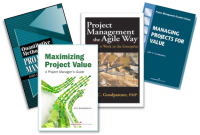
Need more? Chapter 11 in my book "Managing Project Value" will give you all you can handle.
Buy them at any online book retailer!

Read my contribution to the Flashblog

