Monday, March 31, 2014

Org models and Out on a flat limb!


Flat is cool. Delayering is in. The CEO works in an open space with everyone else. What's not to like?

Maybe nothing is not to like, but....

One aspect of delayering often not addressed well is that trust and layers are usually inverse relationships: to wit, low trust organizations can substitute C&C through layers, each defined with protocols -- authorities, responsibilities, escalation, appeal, etc., but high trust organizations find that these things scattered among layers are really not necessary.

Now as you delayer, what is the mechanism to build trust as protocols fall by the wayside along with their companion C&C structure?

Suddenly people who were accustomed to the crutch of bureaucracy find themselves more less out on a flat (delayered) limb! See: "deer in the headlights" phenomenon, and related insecurities attendant to exposure and decision making.

Now the question: can these people -- newly flattened -- now be trusted to do the right thing; summon appropriate wisdom; apply reasonable judgment; and not be panicked by circumstances?

Obviously, there's no answer in general. All is in the particular. Suffice to say, however, that many won't make it flattened. They simply need the bureaucracy in order to function personally. If they didn't, many -- but certainly not all -- would be working somewhere else. They really can't be trusted to work effectively without the structure.

After all, the structure absorbs a lot of the shocks and stresses of everyday work -- do these now fall on the individual?

An obvious exception to flat: the military (or first responders, like police and fire, etc) -- the largest bureaucracy for many.

Duty, honor, country... they still count for something, thank goodness! 

But even there, many summoned to high (or higher) command with fewer layers above them and fewer dependencies beside them simply don't make it, particularly under high stress.


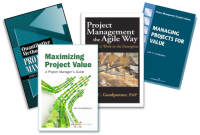
Read in the library at Square Peg Consulting about these books I've written
Buy them at any online book retailer!
http://www.sqpegconsulting.com
Read my contribution to the Flashblog

Friday, March 28, 2014

The volunteer projects


Some assembly required!

Does everyone recognize this as a Lockheed PV-1 Ventura, circa 1942? It's mission was coastal reconnaissance, anti-submarine warfare, and light-duty bombing. The payload was a few small bombs, and the self-armament was a couple of machine guns in a top-side turret.

Restoring this aircraft -- as a museum queen -- is one of my volunteer projects. I'm not the "director of restoration", just one of the rivet guys -- and the not first to work on this. In fact, when we took the wing skin off to restore it, we found "Rosey's" signature inside, dated in 1942!
 
News you can use!
Volunteers are not paid staff -- no kidding! But... Actually, there's a lot to know about doing a project with volunteers because they're different from paid staff -- their training, motivation, accountability, commitment, and willingness to follow directions -- all different!

So, I've been reading the Kindle version of "Practical project management for agile non-profits" by Karen R. J. White. Her experience pretty much tracks with my own.

I recommend her book if you're getting into the volunteer thing. It's got a lot of stuff that is spot on.

What's important to know?
Write this down; you'll need it later:
  • They don't always show up, and they don't often give notice or reasons... just don't show
  • Virtual teams of volunteers are almost unthinkable. You've got to meet and greet in person.
  • If they do show up, they may leave at odd moments, right in the middle of something important, but not important enough to trump their need to leave
  • They can be territorial; prone to settle into something they like to do; and sometimes hostile to help or direction
  • But, if volunteers are working outside of their normal identity and comfort zone, they'll usually take direction readily if they perceive it's value-add. (I had not driven a rivet since 7th grade metal shop, so I needed some training!)
  • They're really not committed strategically to the host organization -- they don't get a paycheck, benefits, promotions, a corner office, or a place to hang out long term.
  • But, my experience is that volunteers can be very committed to organizational success for the project they are working on, putting in longer hours and working harder than the formal demands made by the project.
  • There's always the "faithful forty" as we say in the church volunteer project domain: they show up; work hard; get something out of it for themselves; and leave behind a good product.
  • Volunteer teams bond just like any other; leaders emerge like they always do; and sometimes there's an issue of dominance to be settled. Having a paycheck or not doesn't seem to alter these factors very much
  • Be aware that volunteers are grown children, sensitive to being played for an advantage since they often do not have access to senior paid management and organizational escalation and appeal. And, volunteers can be very sensitive to being the teacher's pet -- or not. Don't play favorites!
  • There's often an age difference, and an experience difference, that can be quite stunning: Seniors who were executives volunteer and are "supervised" by 20-somethings. And, the young supervisors need to be aware that age has a toll -- the older guys may move a little slower, etc.
  • Take care with obvious inefficiencies: the labor is cheap; there's more of it if you need it, so the pressure to be lean is much relaxed. Consequently, the overhead may be a lot higher and its impact not anticipated in the schedule.
  • Benchmarks attained with paid staff are often way too optimistic; see my points above about inefficiency, overhead, and commitment.
  • And, last but certainly not least: put away the jargon and speak in the local dialect. Volunteers may not be former pro's in the project domain; may not know the inside jokes and acronyms; and probably don't know the inside politics.


Bookmark this on Delicious
Check out these books I've written in the library at Square Peg Consulting

Wednesday, March 26, 2014

Get your team from the little pond


For the ambitious, there's always this conundrum: Be the big fish in a little pond, or be a smaller fish in a bigger and presumably more prestigious pond?

Malcolm Gladwell explores the consequences of this choice in his new book "David and Goliath", and he also explores it quite dramatically in this TED presentation to a Google gathering.

His bottom line -- born out by research he quotes from extensively -- is that there are clear advantages in choosing the smaller pond when you can't be the very best in the bigger show. 

His main point in support of this thesis is that a really good talent, but not the very best talent, will have higher self esteem and achieve more because of their higher self assessment than if they measure themselves against a different and more challenging standard.

This is really a form of the cognitive bias psychologists call "prospect theory". The big idea: value, esteem, confidence, despair, joy and the like are all relative to a reference point, not to an absolute standard. (The wealthy can be unhappy and the poor can be happy, etc... it all depends on the reference from which you are measuring)

So, the data support this idea: the bottom third of performers in a pool of truly outstanding people may be in that bottom third because of self-inflicted feelings of inadequacy. Change the pool, and they may be stand-out performers.

For project managers:
Gladwell counsels: Always recruit the best from any pool, but keep in mind that the pool itself doesn't really count for much. So, regardless of a university's standing in a particular field -- say STEM because it hits so many project teams -- go to any program with STEM and get the best in that program. They'll all be winners and self-starters, accustomed to success.

Fair enough, but....

Now that you've got them, they're all in a new pool, and some of the winners are going to find themselves in the lower tier of their new pool.  Ooops, prospect theory cuts in, and problems arise!

This may call for some reshuffling, restructuring of the pools, and other incentives and encouragements to offset the effects of relative position. So, don't be blindsided by this little HR issue as you recruit your team.


Read in the library at Square Peg Consulting about these books I've written
Buy them at any online book retailer!
http://www.sqpegconsulting.com
Read my contribution to the Flashblog

Monday, March 24, 2014

Recharging your leadership battery


David Brooks opines on leadership from time to time, and thus we fell upon one of his essays on recharging your leadership battery.  Brooks' essay is specifically pointed at public sector leaders, and to be sure, there are many project managers and program executives in the public sector, but the points made work in any domain.

Brooks suggests three things you can do to revive any sagging motivation to push through and get things done:
  1. Apprentice yourself to a master craftsman
  2. Get real again; go off and become a stranger in a strange land [domain]
  3. Close off your options so as to not be "master of none"
Point 1:
No one who is a professional in this game stops learning; there's always someone better or someone who has a better way of doing it. So, seek out the master craftsman; the person who has an exquisite grip on the job, and learn from the best. And, if you're the craftsman, take on a protege... you still might learn something

Point 2
Break the mold; be a rebel. Do something different, but do it differently in a different domain. Brooks makes the point that when you return, you'll see things all differently through the prism of a wider experience.

You could, for example, go over to the dark side and leave public service to become a contractor. Or, almost as hard: leave the regulated government contractor business and go into back-office IT..... talk about a domain change!

Point 3:
The conventional advice is "keep your options open", be nimble, and ready to change direction or capture an opportunity at the drop of the hat.

But, then there's the paralysis of analysis. "Open" is often the antithesis of commitment, and a lack of commitment is not that hard to detect by others looking for your commitment. But managers today want you "all in", fully committed, and accountable. You can't do that if you don't close something off.


Read in the library at Square Peg Consulting about these books I've written
Buy them at any online book retailer!
http://www.sqpegconsulting.com
Read my contribution to the Flashblog

Friday, March 21, 2014

Statistics Done Wrong


I've stumbled onto a web-based primer on applied statistics that makes for a good PM's guide to the subject... easy reading, short chapters, and a decent table of contents.

The marketing line is: "Statistics Done Wrong is a guide to the most popular statistical errors and slip-ups committed ... every day. ... Statistics Done Wrong assumes no prior knowledge of statistics, so you can read it before your first statistics course or after thirty years of ... practice."

Entitled "Statistics Done Wrong",  by Alex Reinhart, here's what you'll find:


  • Table Of Contents
  • Introduction
  • An introduction to data analysis
  • The power of p values
  • Statistical power and underpowered statistics
  • Pseudoreplication: choose your data wisely
  • The p value and the base rate fallacy
  • When differences in significance aren’t significant differences
  • Stopping rules and regression to the mean
  • Researcher freedom: good vibrations?
  • Everybody makes mistakes
  • Hiding the data
  • What have we wrought?
  • What can be done?
  • Conclusion
  • Bibliography


Read in the library at Square Peg Consulting about these books I've written
Buy them at any online book retailer!
http://www.sqpegconsulting.com
Read my contribution to the Flashblog

Wednesday, March 19, 2014

When the evidence doesn't compute...


Oops! Something went wrong... the project analysts followed this standard paradigm in three steps, given as:
1. There is a scientific or policy question of some theoretical or practical importance.
2. Researchers gather data on relevant outcomes and perform a statistical analysis, ideally leading to a clear conclusion ..
3. This conclusion informs policy.
Think of this as PLAN A.

But Andrew Gelman asks: "What happens if Step 2 fails?"

Well, we could take Jurgen Appelo's advice: "Measure everything; Conclude nothing". Off hand, I don't see how that moves the ball very well, or very far, but hey!.. Appelo has his reasoning.

Nonetheless, Step 2 does fail -- in fact, in the project domain Step 2 fails fairly often -- and then what's a PMO to do? Yogi Berra's advice comes to mind:"When you come to a fork in the road, take it!"

Enter PLAN B:
Here's Plan B: Invoke your policies and protocols for decision making in the face of uncertainty. If you are a bit short on these, take a look at the work of Tversky and Kahneman: they've written some very informing papers on this very topic.

In short, even if the conclusion is not clear, not unambiguous, not not self-conflicting (wicked), make a judgment as informed as possible and press on! Franklin Roosevelt: "Try something!"


Read in the library at Square Peg Consulting about these books I've written
Buy them at any online book retailer!
http://www.sqpegconsulting.com
Read my contribution to the Flashblog

Sunday, March 16, 2014

The ultimate low-tech risk management tool


Can anyone image doing serious risk management without a checklist? (The answer, of course, is No) Actually, any procedural management can benefit from a checklist.


There's been whole books written about checklists. In fact, one of the more prominent books -- "The Checklist Manefesto" by Dr. A. Gawande -- entitles Chapter 1: "The Problem of Extreme Complexity", recognizing the contributors of breadth and depth and interdependencies (check on this before you do that....) are more than we can reasonably keep in mind.

PDM Heresy
Here's some heresy for the MSProject geeks among us: PDM tools are great for laying out the schedule architecture and getting estimates -- via simulation -- of likely outcomes, but they suck at day-to-day management. Why so? In a word, complexity.

You can't practically put all the dependencies in the tools or the logic would be byzantine. No one could understand or follow it if you put it down (why did you do this? why did you do that?..). Some interactions are best left to the unit commander/team leader.

What's a PM to do?
And, so how to manage those interactions and day-to-day requirements? Checklists! Check off on this and check off on that.... And, it's a great tool at a daily stand-up

Here's some specifics:
  • Small lists... No list too large; keep the near-future in sight
  • Lots of lists; make a new one every time the situation changes
  • Coordinated lists; I have this one.. do you have it's companion?
  • Reusable lists; once a list is validated by actual use, archive it for reuse
  • Validated lists; get SME input to validate the list... a list can be just as wrong as any other tool
  • EV lists; Don't put aside earned value... the sponsor and everyone involved wants output, and they want output commensurate with its value
  • Kanban lists; teams push things along through a sequence of steps... did everything get DONE?
Schedule and WBS
And now to application: checklists are found between the milestones.

Fair enough.

It's all about situational awareness, look-ahead strategies, and understanding the constituents of getting from here to there. There's no new scope; just go to the WBS for the parts and go to the schedule for the milestones. Then: checklists!

The end.

Read in the library at Square Peg Consulting about these books I've written
Buy them at any online book retailer!
http://www.sqpegconsulting.com
Read my contribution to the Flashblog