Friday, May 17, 2024

Innovation Power


Did you know your project might be at the nexus of geopolitical power, military power, and economic power? Wow! That's a big menu for the project office.

Eric Schmidt, formerly a top executive at Google, puts it this way in an essay in "Foreign Affairs", not your usual project read. He calls is INNOVATION POWER.
Innovation power is the ability to invent, adopt, and adapt new technologies. It contributes to both hard and soft power. High-tech weapons systems increase military might, new platforms and the standards that govern them provide economic leverage, and cutting-edge research and technologies enhance global appeal

He goes on: "There is a long tradition of states harnessing innovation to project power abroad, but what has changed is the self-perpetuating nature of scientific advances. Developments in artificial intelligence in particular not only unlock new areas of scientific discovery; they also speed up that very process"

In effect, Schmidt is saying that what's different is that whereas in the past there were plateaus of innovation: Bronze, steel, steam, electricity, telecomm, stored-program stored-data computing. Once you mastered the technology of those plateaus, there was a long period of technological stability.

No more. AI has properties of "positive feedback". Its possibilities just keep on growing. There doesn't seem to be a plateau or stability. And everything is driven by a need to be first .... speed! 

OODA loops
Remember the OODA loops: Observe, orient, decide, act? Well we are just on the cusp of doing that autonomously  self-driving vehicles; autonomous drones; pick-pack-and ship robots; and a myriad of other tasks where speed and accuracy are key.

Quantum Computing
And then comes quantum computing which, when in the positive feedback loop, will drive innovative breakthroughs that are almost unimaginable. 

One wonders if the usual project rails are up to the tasks ahead


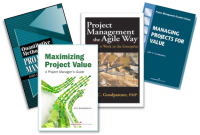
Like this blog? You'll like my books also! Buy them at any online book retailer!
Tuesday, May 14, 2024

AI F-16 Dogfight


Now here's an interesting project: Designing the code for a real F-16 fighter aircraft dog fight. 

As reported in "Breaking Defense", DARPA -- the Defense Advanced Research Projects Agency -- "In a ‘world first,’ DARPA project demonstrates AI dogfighting in real jet"

In late 2023 at Edwards AFB in California we learn: "In the span of a couple weeks, a series of trials witnessed a manned F-16 face off against a bespoke Fighting Falcon known as the Variable In-flight Simulator Aircraft, or VISTA. A human pilot sat in the VISTA’s cockpit for safety reasons, but an AI agent did the flying, with results officials described as impressive — though they declined to provide specific detail, like the win/loss ratio of the AI pilot, due to “national security” reasons."

This stuff just keeps on coming, changing the face of warfare in near-real time.


Like this blog? You'll like my books also! Buy them at any online book retailer!

Saturday, May 11, 2024

Work 4, Take 3 off


Could your project handle a 4-day workweek? 
The principle of "get it done, no matter what it takes" would have to step aside I think. 
But during more routine periods, productivity might actually go up with no additional cost.

Obviously, there's lot to debate.
Here's what 'Management 3.0' thinks are the advantages (paraphrased from a recent newsletter)
Improved Well-being
Evidence shows a shorter workweek leads to reduced stress, lowered risk of burnout, and a significant boost in work-life balance.
Environmental Benefits
Less commuting translates directly to a reduction in carbon emissions. 
Enhanced Productivity
When time is compressed, focus intensifies. Studies, including those by 4 Day Week Global, indicate that employees become more efficient, prioritize effectively, and streamline their workflows, often maintaining or even exceeding previous productivity levels.
Economic Advantages
Improved well-being leads to reduced absenteeism and staff turnover


Like this blog? You'll like my books also! Buy them at any online book retailer!

Friday, May 10, 2024

By the rules, or not?


A lot of great outcomes are directly from emergent innovation
  • Emergent meaning the properties were not predictable from analyzing the constituents; they surprise us all when the integrated constituents all came together and something new appears!
  • Innovation meaning that risks to norms were deliberately taken; a form of destruction-construction
But not everybody is comfortable for destruction-construction; and indeed, there are many industries where the rules and regulations prohibit departure from the norms.

And so if you are managing a rules-based rules-driven project, what's the profile of the staff you need?
The question begs the answer: people who have been successful obtaining quality outcomes while still following the rules ... staying between the hedges, as it were.

So, who are 'they' that can get it done within the rules?
Look here first for the "rules" people:
  • Former military and police
  • Former government agencies staff
  • Former very large corporate leaders
  • Former staff from major 'safety' projects (where the stakes were life-threatening)
  • People who value discipline, even if not one of the 'formers'
  • Athletes from team sports, particularly if not the star of the team
  • Socially moderate, and so likely to fit well into a heterogeneous team
Now, of course, there are a lot of 'formers' from rules-based organizations that are 'former' because they can't follow the rules. It's likely they have been invited to leave and apply their spirits elsewhere. Your job is to filter these rules-misfits out of your hiring plan.

Rules don't necessarily quash innovation
Rules generally go to methods and limits. Rarely do you find a rule about an outcome.
So, within the allowable methods, and within the allowable limits of disturbance, sustainability, availability, and quality in the large sense, any innovative outcome is possible.

You just need to hire the 'rules people' to get there!


Like this blog? You'll like my books also! Buy them at any online book retailer!

Wednesday, May 8, 2024

Risk Management: Chains and funnels


What to make of chains and funnels? And, if I also stick in anchors, does it help?


What I'm actually talking about is conjunctive events, disjunctive events, and anchor bias:
  • Conjunctive events are chains of event for which every link in the chain must be a success or the chain fails. Success of the chain is the product of each link's success metric. In other words, the chain's success probability degrades geometrically (example: chain of 'n' links, each with probability 'p', has an overall probability of p*p*p* .... for 'n' p's.)
      
  • Disjunctive events are independent events, all more or less in parallel, somewhat like falling in a funnel, such that if one falls through (i.e, failure) and it's part of a system, then the system may fail as a whole. In other words, if A or B or C goes wrong, then the project goes wrong.


The general tendency to overestimate the probability of conjunctive events leads to unwarranted optimism in the evaluation of the likelihood that a plan will succeed or that a project will be completed on time. Conversely, disjunctive structures are typically encountered in the evaluation of risks. A complex system, such as a nuclear reactor or a human body, will malfunction if any of its essential components fails.
Daniel Kahneman and Amos Tversky
"Judgment Under Uncertainty: Heuristics and Biases"

Fair enough. Where does the anchor come in?

Anchoring refers to the bias introduced into our thinking or perception by suggesting a starting value (the anchor) but then not adjusting far enough from the anchor for our estimate to be correct. Now in the sales and marketing game, we see this all the time. 

Marketing sets an anchor, looking for a deal in the business case; the sales guy sets an anchor, hoping not to have to give too much away post-project. The sponsor sets an anchor top down on the project balance sheet, hoping the project manager will accept the risk; and the customer sets anchors of expectations.

But in project planning, here's the anchor bias:
  • The likely success of a conjunctive chain is always less than the success of any link
  • The likely failure of a disjunctive funnel is always greater than the failure of any element.

Conjunctive chains are products of numbers less than 1.0.
  • How many of us  would look at a 7 link chain of 90% successes in each link and realize that there's less than one 1 chance in 2 that the chain will be successful? (probability = 0.48)
Disjunctive funnels are more complex.
They are the combinations (union) of independent outcomes net of any conjunctive overlaps (All combinations of OR less all AND). In general the rules of combinations and factorials apply.
  • How many of us would look at a funnel of 7 objects, each with likely 90% success (10% failure) and realize that there's better than 1 chance in 3 that there will be 1 failure among 7 objects in the funnel? (probability = 0.37 of exactly 1 failure)*
 The fact is, in the conjunctive case we fail to adjust downward enough from 90%; in the disjunctive case we fail to adjust upward from the 10% case.  Is it any wonder that project estimates go awry?

_________________________
*This is a binomial combination of selecting exactly 1 from 7, where there are 6 conjunctive successes and 1 conjunctive failures: factorial (7 take 1) *conjunctive failure * conjunctive success


Like this blog? You'll like my books also! Buy them at any online book retailer!

Sunday, May 5, 2024

Flat organization, or Not?


The world was flat, but perhaps no more.
The same applies to projects.

In the flat system, we have these properties:
  • There is no "place". Anybody and anything can be anywhere that there is connectivity
  • Capital flows (largely 'cost' in the project world) are nearly borderless. They are quick, inexpensive transactions that can move the money to the cost center at a stroke
  • Cost centers locate to the most efficient areas, and such searches for cost effectiveness can be somewhat dynamic
  • Insofar as components have to have some 'national identity', assembly or manufacturing is "colored" by these requirements.
  • Supply chains (actually, not a chain but a mesh of nodes and links) link everything; nodes and links are optimized to provide maximum efficiency and fault resistance.
  • Supply, manufacturing, and assembly are anti-hierarchical. They are borderless-flat
  • The 'US dollar' is supreme, and safe; everybody trades relative to the dollar.
  • Labor is somewhat fungible. There are trained workforces, of course, but similar workforces are interchangeable.
  • Labor loyalty is weak; labor moves around, seeking maximum return on personal interests
  • Risks are global in their spread
The Covid crises emphasized many of these properties. 
But, as they say: 'Covid is over' (except perhaps in China)

Now, in the post-Covid world we see also some counter-forces to the flat world, and by extension, the flat project:
  • Return to the office
  • Dress the part
  • Work reasonable hours; rebalance work and off-work
  • Be a team player, less of an individualist
  • Set up borders and boundaries to 'contain' activity within a physical sphere or economic or national zone, as it were
  • Contain risks to the home front
  • Promote loyalty
  • Keep the money at home
  • Pay more as a cost input, but also expect the customer to pay more to the top line in the name of 'buy local'
If you see this coming, you may want to rebaseline for less flatness!


Like this blog? You'll like my books also! Buy them at any online book retailer!

Thursday, May 2, 2024

Leadership-Risk linkage


When applying the principle of "calculated risk", leaders should pick subordinates with the intellectual subtlety to evalutate strategic and operational problems in their full context.

They should be given the latitude to judge just how much risk is appropriate given the value of the objective and the balance of resources.

Paraphrased from the writings of historian
Craig L. Symonds


Like this blog? You'll like my books also! Buy them at any online book retailer!