Saturday, May 30, 2020

Risk management: hierarchy v. mesh


Almost anyone who's been around projects for a few years has experienced hierarchy: it's like a pyramid, with one person at the apex and a number of layers spreading out below, interconnected, for the most part, top-down.

On the other hand, another structure is like a mesh, wired for the most part peer-to-peer, and mostly flat -- few hierarchical titles and few top-down controls, and lots of spread.

And now comes risk management:
  • If you need to understand everything coming at you .... go mesh
  • If you need to allocate scarcity ... go hierarchial
  • If you need reaction speed ... go mesh
  • If you need a coordinated response with maximum efficiency .... go hierarchial
  • If you need to be anti-fragile and immune to risk failures ... go mesh
  • If you need a lot of redundant efforts on risk containment (looking for something that will work) ... go mesh
  • If you need a consistent relationship with outsiders ... go hierarchial
  • If you can't afford to depend on one person or team ... go mesh
Got it? Are we clear?


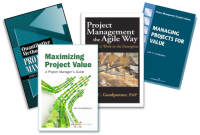
Buy them at any online book retailer!

Wednesday, May 27, 2020

There's a new tension in town ....


There's a new tension in town .... Remote v Local
  • 30M+ Americans have jobs and are working from home (the Remotes)
  • 60M+ Americans can't work from home (the Locals), and 50% of them may not have jobs
If that's not enough to amp the tension between the haves and have-nots, then consider the risk management regime of each:
  • The Remotes have a much lower risk environment from Covid-19, but also from every other hazard, not least of which is simply driving to work
  • The Remotes have a good deal of personal control over their environment, and personal control over how they manage the risk .... who to see and when and where
 And then there is the disparity between the cost-of-work borne personally by each:
  • The Remotes personal "cost-of-work" is much lower (parking, gas, clothes, lunch are all less .... in some cases much less) but their compensation is usually the same as before:
  • The Locals continue paying the higher work costs, usually also working for a lower compensation because, generally, Local jobs pay less
Managing these tensions may be a new task in the PM's job jar, and may be a management task well beyond the PM's reach and authority, but nonetheless this tension will invade the project, effecting productivity and relationships.

And, what's going to happen when the Remotes abandon their nirvana and rejoin the Locals who have all along borne the risks and costs? How is that going to work?

Good luck with all that!


Buy them at any online book retailer!

Sunday, May 24, 2020

The oldest technique in risk management


The oldest technique in the book, indeed before there were even books, is "acceptance"
  • To drive a car is to accept the risk that the other driver isn't too drunk, too sleepy, too unskilled, too distracted, too whatever
  • To take on debt is to accept the risk that you'll have the means to repay without bankrupting yourself
  • To take on unsecured credit is to accept the risk (trust, really) that you'll be repaid
  • To live with another person ......
  • To be a whistle-blower (even though there are some risk management elements built into law) ...
And, so it will be with medical pandemics, financial melt-downs, and sadly, climate changes, we'll learn to accept the risk .....

Because we have to.
  • Agriculture was a risk if you were a hunter-gatherer
  • Industry was a risk if you were a farmer
  • Change is a risk, no matter ...
  • And, now we've got living together is a risk. But that risk will be accepted, in time


Buy them at any online book retailer!

Thursday, May 21, 2020

Your baseline is crushed


With the pandemic effects on project offices, supply chains, capital funding, customers, and cultural changes (how long before it's the same again?), a lot of projects will shut down ... permanently. Their business case crushed in the effects

Rebaseline in two steps:
  1. Declare the "old" project ended; collect the actuals and variances and record them in the ledger. Collect all the inventory for future use: WIP; finished but not delivered product
  2. Invent a new project; transfer in all the WIP and other inventory. Start a new plan with the checklist below
Inventing a new baseline
  • Forget your baseline ... that's all in the history file. Plan a restart as if new
  • Plan for a go-forward velocity that is going to be slower, slogging through a myriad of restrictions, broken links, missing supplies, etc
  • Plan to spend on technology that you probably didn't think you needed before, but you do now
  • Re-calibrate customer needs and wants, functions, features, convenience, safety, security (how did Zoom zoom into our lives?)
  • Can you visit your customer? Should you visit you customer? Is a virtual visit good enough to understand the requirements?
  • Factor in the changed culture .... some values have changed for what you're inventing, I'll bet
  • Evaluate risks with a revised calibration .... where does social fear factor in? 
  • Plan for a medical protocol overlay. Masks, social distancing etc?
What could possibly go wrong?!


Buy them at any online book retailer!

Monday, May 18, 2020

Saying it visually


Visual communications, or communicating visually, are all the more important as the virtual workplace becomes the "new normal". There's a skill to be learned for effective communications with visual as the centerpiece.

Got these needs?
  • Proposal
  • Message
  • ESL audience
  • Virtual meeting?
Then this Khan Academy series on visual language is a place to start.
There's power in framing, stretching, shaping .... not to mention color, contrast, shading.


Buy them at any online book retailer!

Friday, May 15, 2020

The biases come out


Under stress, the biases come out
Not only do the risks change, but risk attitudes change as well
The stakes may be higher; the consequences greater.

Now is the time to revisit the best book ever written on risk management -- in my opinion


"Against the Gods, The remarkable story of Risk" by Peter L. Bernstein is an excellent read and ambitious premise well delivered.

Perhaps the best general history of risk -- and presentation of the major concepts of risk -- that is understandable by all practitioners at any level.

The content is presented in a general historical order in major sections by epoch. The first being from the ancients to 1200, then the middle ages and Renaissance. Finally, then into the industrial revolution, and modern era.

Along the way, Bernstein recounts not only the emerging understanding of risk per se, but also the allied concepts of counting, numbers, chance, and of course, business management.

No math! (Almost no math)
There is not much math or statistics to trip up the qualitative mind! (Yea for that) But, the presentation of the evolution of our understanding of chance introduces many of the main characters and demonstrates their contributions with just enough math/quantitative examples to make it interesting.

Mystical and Divine... pressing on!
Much of this material describes the period 1700 - 1900 when much of the modern underpinnings of chance, probability, and statistics were developed and made understandable to the general business population. We learn, for instance, that it was in this period that the notion of risk in the modern sense emerged from the mystical and divine to the cause-effect concept.

While the parallel developments of mathematics, business practises--like insurance--and a math/cause-effect foundation for risk are presented with a storyteller's gift, I found Bernstein's recounting of the ideas that developed after 1900 to be the most interesting and insightful.

Along comes the psychologists
Of course, the story in this book ends just about the time that the ideas of Amos Trversky and Daniel Kahneman, first developed in the 1970's, are gaining popular acclaim in the 90's. Thus, in this part of the book we get a great explanation of the expansion of utility theory first developed in the 1700's but advanced into Prospect Theory by Tversky and Kahneman.

There is also excellent explanations of various biases and other cognitive maladies that intrude on the rational and objective. We learn a good deal about the failure of invariance--the idea that same manager can be risk averse and risk seeking depending on not only the point of view presented (glass half full/half empty) but also whether there is a sure loss or a sure win at stake.

Someone else likes it
Bernstein's expertise is in the financial world. John Kenneth Galbraith wrote of "Against the Gods": "Nothing like it will come out of the financial world this year or ever. I speak carefully; no one should miss it".


Buy them at any online book retailer!
Tuesday, May 12, 2020

Shut down, start up


There's a lot of this stuff going around: "Shut down, start up".

You get a "stop work" order; if you're a government contractor, you may have strict protocols to follow, or worse, you may have a lot of expenses to secure the project for which there is no immediate cash flow.
  • Select a skeleton staff for the shut-down work
  • Work with HR to furlough the redundant staff; ditto "security" if there are cleared people involved
  • Figure out the physical and electronic security for the partial product and inventory
  • Some stuff may have a shelf-life. Who is to run the maintenance on that?
  • Who has the ownership or title to the intellectual property? You may need some legal help to secure the project's IP
  • Set up an archive for project records; assume the original staff may not return, so where is everything to be found?
  • Set up billing codes in the chart of accounts for the shut-down work
  • Bill-out whatever you can; some stuff may not be billable overhead and may come off the bottom line.
And then you get a "restart work" order. But, restart with whom, how, where?
  • Is the business case still valid? Is there a modified business case going forward? Revisiting customers and business sponsors should be on your list
  • Green field staffing? You may want to reorganize the staffing, not rehire everyone, and recruit for others. Is there an HR policy issue here? Perhaps you don't have the flexibility to restaff from a green field.
  • Green cards: are they still around? No? What now?
  • Incentives? Some may require an incentive to return. Where does that fit into policy and finance?
  • Where to set up shop? Your project space may no longer be available; maybe the building has been shuttered
  • Restart virtually? Do it with a "gig" staff? How do you cover the cost of 'gig' turnover?
  • IP? How will you redistribute the intellectual property of the project? Indeed, do you even have a clear title to the IP? Did some of it walk out with the shut-down?
  • Cost-schedule-scope: And, with the experience base changed, the baseline going forward will be different. Costs and schedules will be different.
This stuff is hard!


Buy them at any online book retailer!